"Taqiyya (Dissimulation) in the Bahá’í Faith” —– PART 2
Bahá’ís have often expressed their dislike towards Shi’ites, claiming that there is no concept of Taqiyya (Dissimulation) in the Bahá’í Faith. They cite the statements of the martyred Bábís and Bahá’ís, who were killed, arguing that if they had practiced Taqiyya, they might not have faced such persecution.
Bahá’ís view Taqiyya as deceit and hypocrisy, asserting that Bahá’u’lláh, the founder of the Bahá’í Faith, abolished it. However, by examining sources, it becomes clear that Bahá’u’lláh did not annul Taqiyya, rather he even commanded its practice. There is no evidence in Bahá’u’lláh’s writings suggesting its cancellation, and Bahá’ís followed this practice. ‘Abdu’l-Bahá, Bahá’u’lláh’s son, also adhered to his father’s command to observe Taqiyya.
The decree against Taqiyya was first issued by Shoghi, and whether Shoghi had the authority to make such a declaration is not the main focus of this article.
Bahá’u’lláh states:
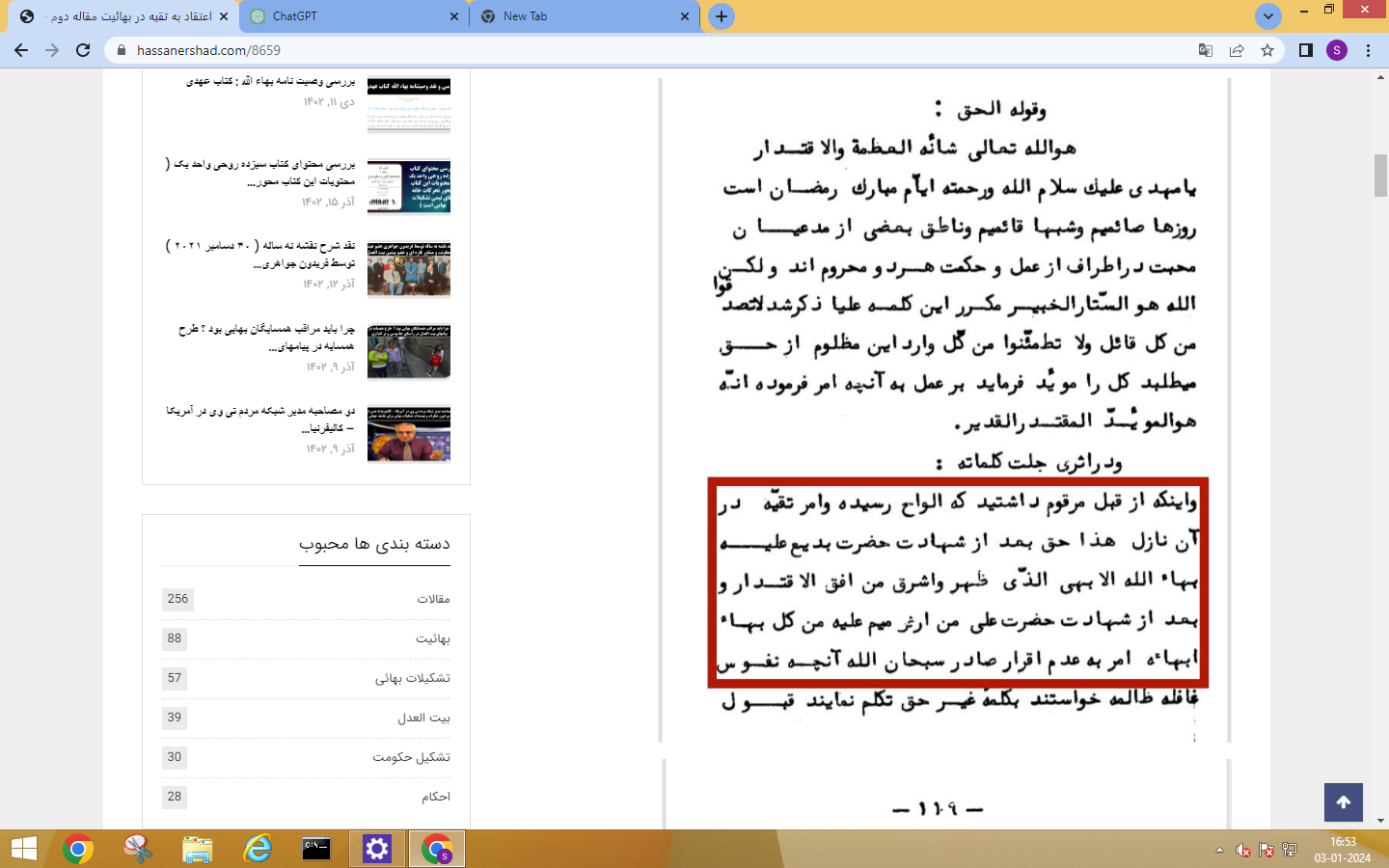
"Now, it was previously conveyed to you that Tablets had been revealed, and the command of Taqiyya (dissimulation) was in them. This is indeed true!
Reference:
"Amr va Khalq" (Command and Creation) by Fazil Mazandarani , Volume 3, Pages 118-119.
Bahá’u’lláh said, “Conceal what you have with you. Taqiyya became a religious duty and the purpose (of Taqiyya) is to safeguard the sacred souls. Observe how many people were killed just because they did not hide and now Taqiyya has become necessary, as most Tablets are adorned with it ( Taqayya ).”.
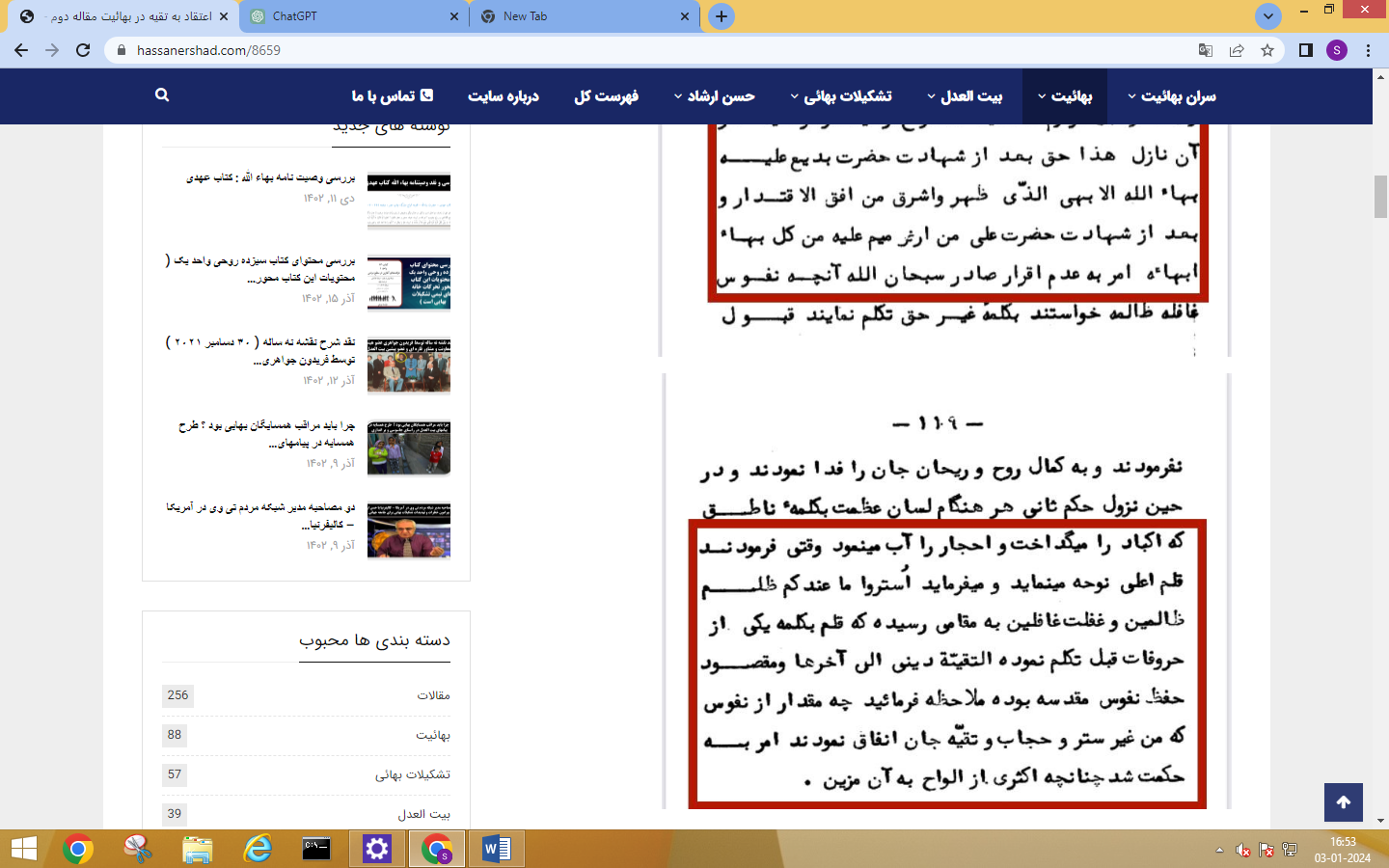
Upon reading the above passage, we clearly see:
Bahá’u’lláh has commanded Taqiyya, and he emphasizes the importance of concealing one’s faith to protect believers from harm. He criticizes those who refuse to follow this guidance, calling them heedless.
Bahá’u’lláh states that the command of Taqiyya is given in most of the Tablets.
It is mentioned in the tablet addressed to Mulla Ali Bejastaani that,
"Baha’u’llah explicitly asserts that any command that leads to disturbance and enmity with the Baha’is, even if that command is other than the explicit order of God,acting upon it is contrary to wisdom and is not permissible!. Here, wisdom is equivalent to concealment and veiling."
Amr va Khalq (Command and Creation) Volume 3, Page 116.
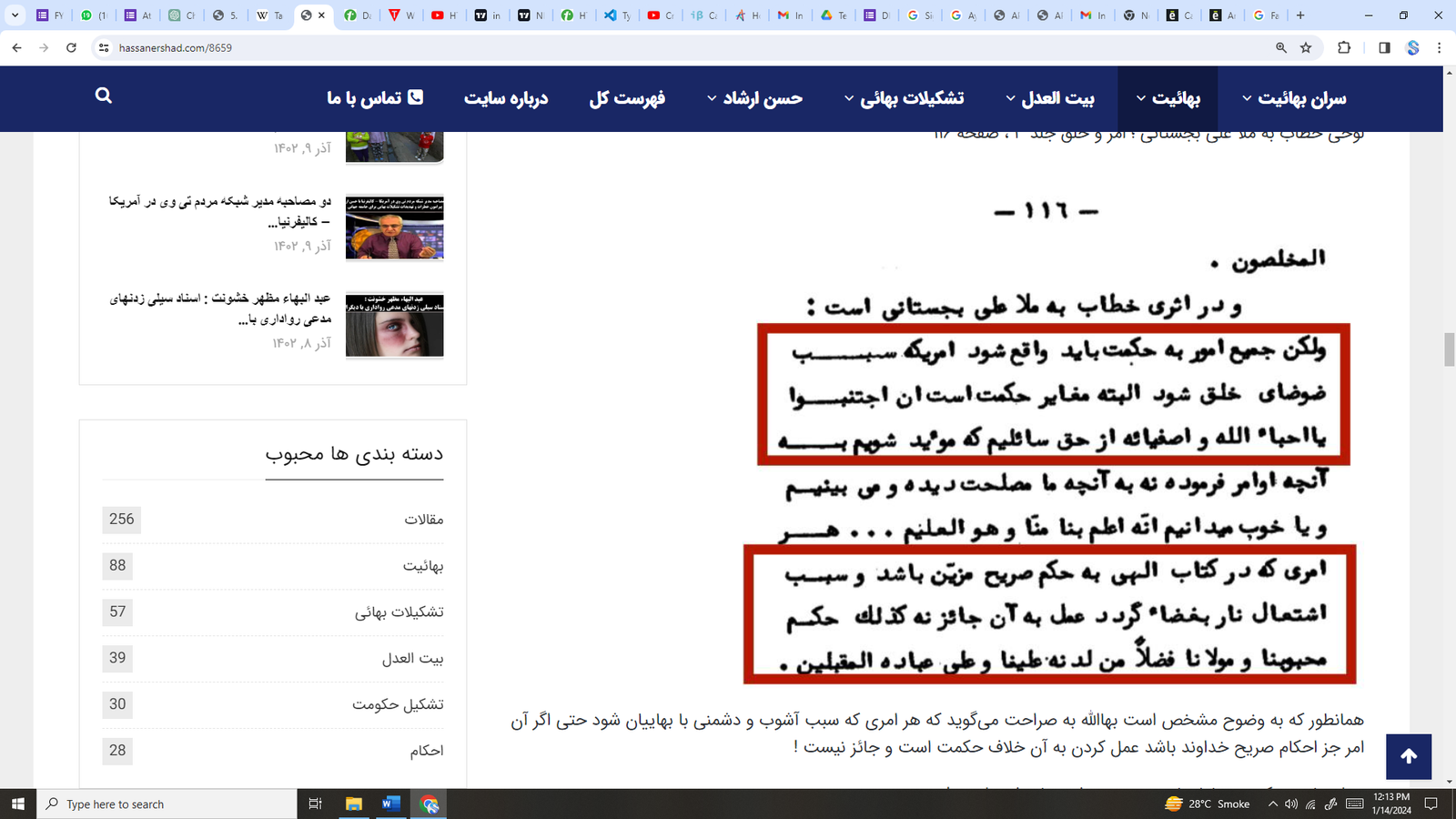
"Tablet addressed to Zeyn al-Moqarabin (Zeyn the Approached One), Amr va Khalq (Command and Creation), Volume 3, Page 116."
"Here too, acting upon the ordinances that lead to disturbance and difficulties for the Baha’is and the lack of acceptance by the people is contrary to wisdom and is prohibited!"
It is mentioned in Amr va Khalq (Command and Creation), Volume 3, Page 118 that,
"Baha’u’llah himself practices taqiyya, fasting during the day like muslims, and engages in preaching at night away from the eyes of enemies.”
It is mentioned that Baha’is who outwardly claim to love Baha’u’llah but do not act according to wisdom are only pretenders of love and are not true lovers. This emphasizes the importance of observing wisdom (taqiyya).
The phrase in the tablet that , ‘Do not believe everyone’s claim and do not feel secured with every newcomer’ conveys the utmost importance of taqiyya and concealment in the eyes of Baha’u’llah.
Abdul Baha has given instructions for taqiyya (dissimulation) in the Tablet addressed to Sheikh Faraj Allah Kordi, which is included in the Makatib (Epistles) Volume 3, Page 325. It is as follows :-
"The spread of truth among clever and wise individuals, who possess the potential to discover the truth, has brought us joy. However, you must consider wisdom from all aspects.Therefore, it is necessary for you to practice taqiyya”. !
As evident, Abdul Baha, like Baha’u’llah, equates wisdom with taqiyya.
In another tablet addressed to Faraj Allah Kordi, found in the Makatib (Epistles) of Abdul Baha Volume 3, Page 326, he states:
"The believers must remain completely silent for a few days, and if someone asks, they should entirely express ignorance… because the present situation necessitates such wisdom."
Here also , Abdul Baha interprets wisdom as hiding ,veiling and denying.
In fact it was Shoqi, who said: "I implore you, O believers…," asks the Baha’is to make every effort and adhere to the most difficult and dangerous task. He urges them to abandon the traditional practice of taqiyya, considering it the hardest and riskiest action.
This request, however, was not fully implemented during Shoqi’s time and even after his rise.
In cases where the interests of the Baha’i organization require it, the traditional practice of taqiyya is adhered to !!